Liza Choa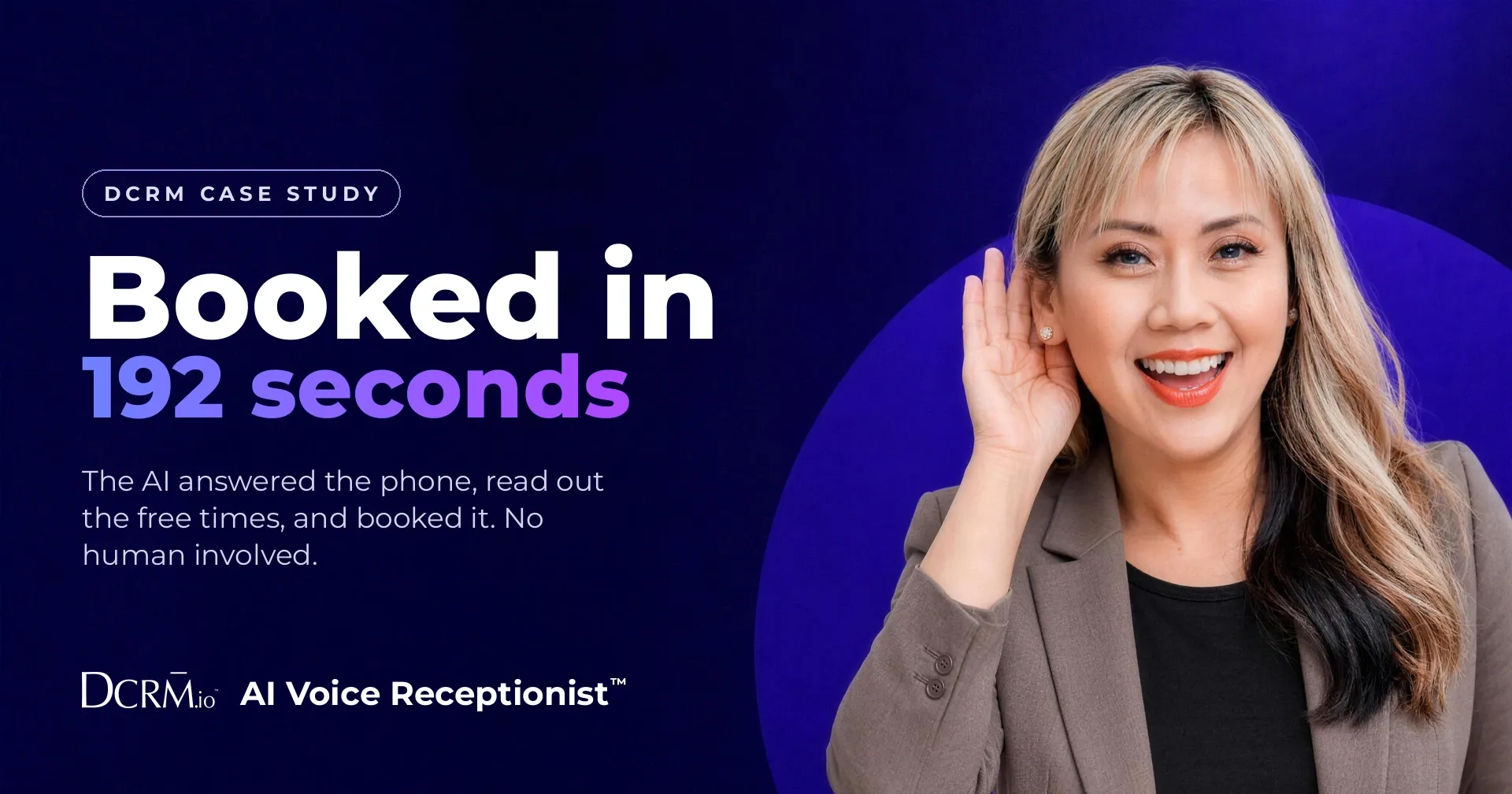
Quick answer
Can an AI voice receptionist book a dental appointment on its own?
Yes, where it holds the calendar. At one implant practice a caller rang at 11:46 on a Monday, and the AI read out 2 real times, took the answer, booked the appointment and confirmed the email address in 192 seconds. Across 6 practices, only 5 of 75 AI voice calls went that far.
A prospective patient rang the practice at 11:46 on a Monday morning to get their implant procedure started, and the AI Voice Receptionist™ picked up. 192 seconds later they had an appointment, at 4:30pm on the Wednesday, and nobody at the practice had been involved in any of it.
This is the one I have been looking for. I have been through 369 booked appointments across 6 practices to find a call where the AI did not hand over, did not promise a callback, and did not say “the team will confirm shortly”. It just booked it.
The numbers
- On the call
- 192seconds
- Humans involved before the booking
- 0
- Forms submitted
- 0
- Case value
- $5,000
- 11:46amCall received. The AI answers
- 11:51amOpportunity created
- 11:53amBooked In
- Wednesday 2 September, 4:30pmThe appointment it booked
The treatment was an implant procedure.
What the AI recorded
This is the note the voice AI wrote on the record, word for word, with the caller’s name and the practice’s taken out:
Read the bolded bit again. Not “the team will confirm”. Booked.
In plain English
The caller had already had a wisdom tooth out and wanted to get on with the implant. That is not a simple enquiry. It has a clinical sequence behind it and a patient who knows what they want.
The AI understood it, opened the calendar, read out what was actually free, let the caller pick, took the booking, confirmed the email address and told them a text was coming.
That is the entire job of a front desk coordinator taking a booking, done at 11:46 on a Monday in just over 3 minutes.
- Booked appointments reviewed, across 6 practices
- 369
- With a genuine AI voice call on the record
- 75
- Where the AI completed the booking itself
- 5
Why it works here and not everywhere else
This practice is the only one of the 6 where the AI holds the calendar directly.
Everywhere else the appointment lives in a practice management system the AI cannot write to, so the best it can do is capture the request. That is not a limitation of the AI. It is a question of what it has been connected to, and it is the single thing that separates “booked” from “will be confirmed”.
The words are mine. 20 years in sales teaches you that the moment someone says yes is the moment you take the booking, which is why this AI reads out 2 real times instead of asking when suits.
Something else on this record
The same caller rang 3 times that morning.
- 10:28amAbout confirming an existing appointment. The AI records the name wrongly
- 11:46am192 seconds. Booked
- 11:50am19 seconds. The AI records the name wrongly again, and differently
So on the day it got a booking right, it got the same person’s name wrong twice. If you are considering this, know that the name capture is the weakest part and plan for your team to check it.
Frequently asked questions
Did the AI really make the booking, or did a person?
The AI. Its own note says the appointment was successfully booked, the opportunity source is the phone call, there is no form on the record, and no human note exists before the stage moved at 11:53.
How long did the AI voice booking take?
192 seconds on the call. The opportunity was marked Booked In 7 minutes after the call started.
How often does an AI voice receptionist complete a booking on its own?
Rarely, and only where the AI holds the calendar. 5 completed AI bookings across the 369 appointments I reviewed, all at 1 practice.
Where does the $5,000 come from?
It is the case value of an implant, taken from what the caller said on the call. There is no treatment field on this record, so it is a table value, not a quote.
Does the AI voice receptionist get things wrong?
Yes. On 2 other calls the same morning it recorded this caller’s name incorrectly. Check the name.
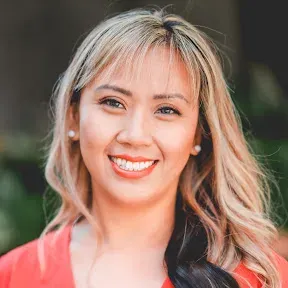
Written by
Liza Choa
Liza Choa is the founder of DCRM and Practice Growth Studio, a boutique dental marketing agency working behind the scenes with some of the most respected dental practices in Australia. She has spent over a decade helping practices grow and scale.
She built DCRM after seeing the same problem in practice after practice. The enquiries were already there, but the new patient numbers did not reflect it. DCRM bridges that gap, so practices increase the return on the marketing they are already paying for.
Disclaimer: The figures in this case study reflect the results of one dental practice over a defined period, and were taken from that practice’s DCRM account at the date stated. The practice is not identified, and identifying details have been removed or generalised. Results vary between practices and depend on factors outside the platform, including enquiry volume, treatment mix, pricing, location, team capacity and how consistently the practice follows up. These figures are not a prediction, projection or guarantee of the results any other practice will achieve. Data is reported as recorded in the platform and has not been independently audited. No patient information is disclosed.